
Quartz Bannerstones: Quartz Butterflies, Hardstone and Value
Quartz bannerstones are among the most admired artifacts a collector can own. Quartz is far harder than slate, so every quartz bannerstone represents an enormous investment of skill and time by its Archaic maker. The material also shaped the design: quartz butterflies have a thick, rounded look that sets them apart from their thin-winged slate cousins.
This guide covers the kinds of quartz used for bannerstones, why quartz pieces look the way they do, how they were made and what collectors look for. For an overview of all bannerstone forms, see Bannerstones: The Complete Guide.
What Is a Quartz Bannerstone?
A quartz bannerstone is any bannerstone carved from quartz or quartzite. The best-known form is the quartz butterfly, which the Archaic Bannerstone Project recognizes as its own butterfly sub-type. Quartz was also used for hourglass, bottle, horned and other forms. Like all bannerstones, quartz examples date to the Archaic period, roughly 8,000 to 3,000 years ago.
Types of Quartz Used
- Clear and white quartz: crystalline and translucent to milky.
- Green quartz: the McGuire and Harvey collections include a 2.75 inch green quartz horned bannerstone from southern Illinois.
- Ferruginous quartz and quartzite: iron-stained quartz in warm reds, browns and golds. The same collections include a 2.4 inch ferruginous quartz hourglass from Holmes County, Ohio. Collectors often note that Late Archaic hourglass, butterfly and bottle types were frequently made from ferruginous quartzite.
See examples in the Terry McGuire and Ed Harvey Bannerstone Collections.
Why Quartz Butterflies Look Different
Quartz cannot be carved into the thin, delicate wings possible in banded slate. Researchers have pointed out that the thin wings of slate and granite butterflies could not be cut from quartz, while the thick, rounded form of a quartz butterfly would look unfinished if it were carved in slate. In other words, Archaic carvers designed for their material. A quartz butterfly's chunky profile is not a flaw. It is the signature of the type.
Butterflies made of quartz and other brightly colored stones are rarely found broken, which has led some researchers to suggest they served more as status objects than as working tools.
How Quartz Bannerstones Were Made
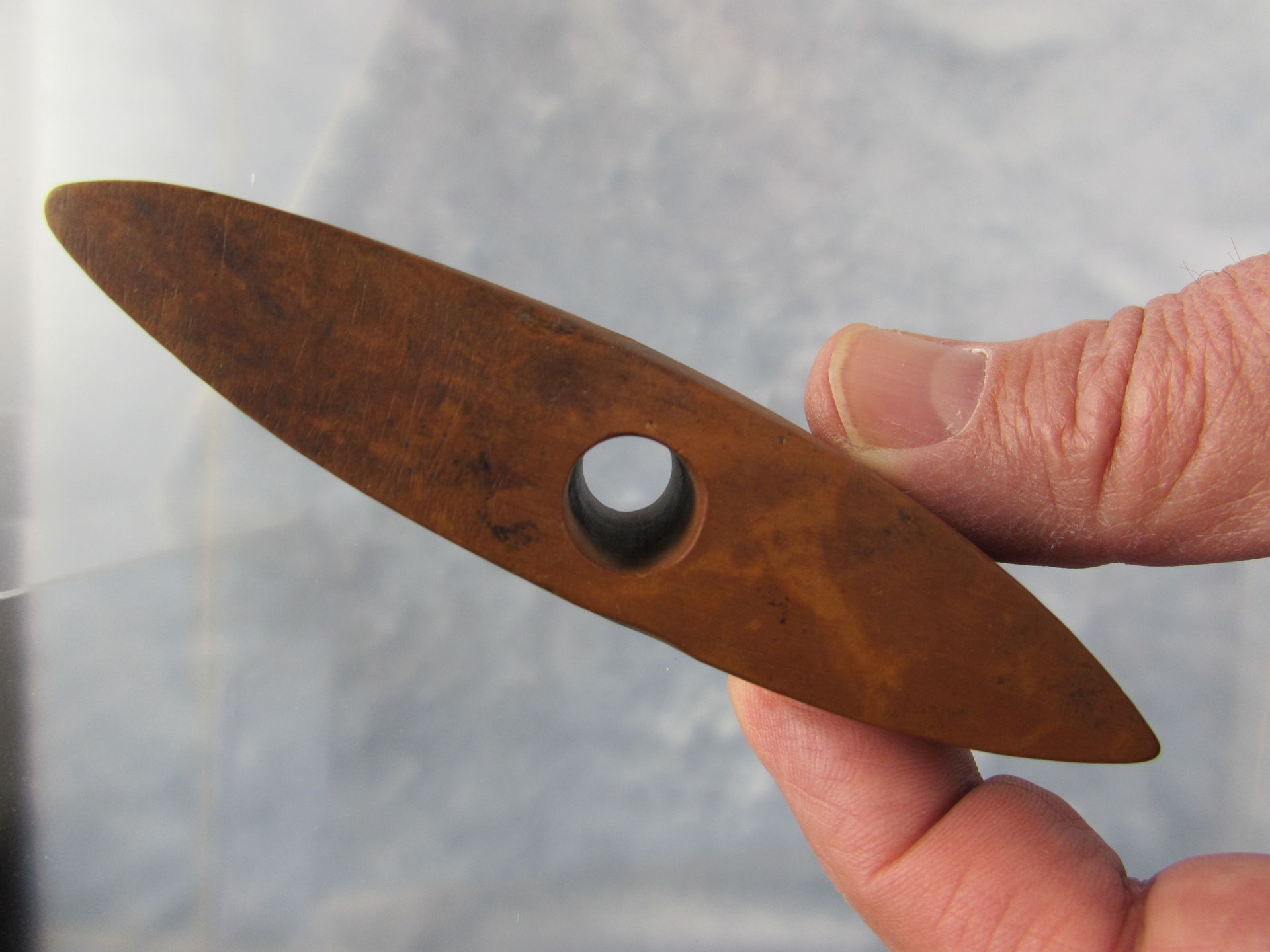
Shaping quartz meant long hours of pecking and grinding with abrasives. The central hole was drilled with a hollow tool such as cane, spun with sand and water as the abrasive, a method that can work through slate, granite and even quartz, but slowly. That labor is one reason quartz bannerstones are so highly valued today.
How to Identify a Quartz Bannerstone
- Material: hard and crystalline, sometimes translucent. Iron-stained pieces show warm red, brown or golden tones.
- Form: thicker and rounder than slate examples of the same type, especially in butterflies.
- Surface: a ground and polished finish, often with a soft sheen. Look for natural weathering in crevices and inside the hole.
- Drilling: ancient holes show fine circular striations. A perfectly smooth, uniform bore can indicate a modern drill.
- Be cautious: quartz pieces are valuable, so reproductions exist. An expert opinion is worth getting before buying or selling.
What Is a Quartz Bannerstone Worth?
Quartz bannerstones are among the most sought-after bannerstones. Value depends on the form, color and clarity of the quartz, size, symmetry, condition and provenance. Quartz butterflies with good color, balanced form and a documented history draw particular interest. For a realistic value, get a free bannerstone appraisal.
Quartz Bannerstone FAQ
What is a quartz butterfly bannerstone?
A butterfly bannerstone carved from quartz. Because quartz cannot take thin wings, quartz butterflies are thick and rounded compared with slate butterflies.
What is ferruginous quartz?
Quartz or quartzite stained with iron, giving it red, brown or golden colors. It was used for hourglass, butterfly, bottle and other bannerstone forms.
Are quartz bannerstones valuable?
They are among the most desirable bannerstones, because quartz was so difficult to work. Value still depends on form, condition and provenance.
Have a Quartz Bannerstone?
Send clear photos of each side and the drill hole, with a ruler for scale, for a free appraisal. We buy single pieces and whole collections. Learn how we buy bannerstones, or browse bannerstone types.